Impact Portfolio
Our Work with the United Nations

Earth Summit ’92
Top Recommendations (corporate + environmental + policy-focused)
1. Sustainability Equity – Captures the balance between development, conservation, and financing; directly ties to Agenda 21.
2. Green Mandate – Suggests authoritative, action-oriented guidance for governments and major groups.
3. Resource Blueprint – Emphasizes the 40-chapter framework with activities, objectives, and cost evaluation.
4. Planetary Capital – Elevates environmental and social dimensions to asset-based, investable language.
5. Implementation Weight – Highlights the means of execution, financing, and cost evaluation sections.
1. Sustainability Equity – Captures the balance between development, conservation, and financing; directly ties to Agenda 21.
2. Green Mandate – Suggests authoritative, action-oriented guidance for governments and major groups.
3. Resource Blueprint – Emphasizes the 40-chapter framework with activities, objectives, and cost evaluation.
4. Planetary Capital – Elevates environmental and social dimensions to asset-based, investable language.
5. Implementation Weight – Highlights the means of execution, financing, and cost evaluation sections.

In partnership with:
United Nations Conference on Environment and Development

A Vision of Hope
Top Recommendations (corporate + UN-credible + reform-focused)
1. Reform Capital – Suggests investment in structural UN modernization; fits the General Assembly streamlining and ICC recommendation.
2. Systemic Equity – Captures the document’s breadth (economic, legal, humanitarian, financial systems) plus fairness/justice.
3. Partition Leverage – Plays on UN-business + UN-NGO collaboration as strategic force multiplication.
4. Blueprint Weight – Emphasizes the document’s prescriptive, reform-oriented nature (early warning systems, world central bank, management principles).
5. Mandate Amplification – Highlights expanding UN’s role across business, NGOs, security, and development
1. Reform Capital – Suggests investment in structural UN modernization; fits the General Assembly streamlining and ICC recommendation.
2. Systemic Equity – Captures the document’s breadth (economic, legal, humanitarian, financial systems) plus fairness/justice.
3. Partition Leverage – Plays on UN-business + UN-NGO collaboration as strategic force multiplication.
4. Blueprint Weight – Emphasizes the document’s prescriptive, reform-oriented nature (early warning systems, world central bank, management principles).
5. Mandate Amplification – Highlights expanding UN’s role across business, NGOs, security, and development

In partnership with:
United Nations

Human Rights – The New Consensus
Top Recommendations (corporate + human rights + consensus-building)
1. Rights Equity – Captures human rights as an asset class; fits the 14 legal standards and developing world focus.
2. Consensus Capital – Directly echoes the title “the new consensus” while adding investment-grade weight.
3. Mandate Justice – Bridges UNHCR’s long-term solutions mandate with the justice framework of human rights.
4. Democracy Leverage – Highlights the document’s four pillars (human rights, democracy, development, peace) as strategic force.
1. Rights Equity – Captures human rights as an asset class; fits the 14 legal standards and developing world focus.
2. Consensus Capital – Directly echoes the title “the new consensus” while adding investment-grade weight.
3. Mandate Justice – Bridges UNHCR’s long-term solutions mandate with the justice framework of human rights.
4. Democracy Leverage – Highlights the document’s four pillars (human rights, democracy, development, peace) as strategic force.

In partnership with:
The UN Refugee Agency
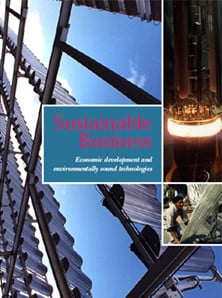
Sustainable Business
Top Recommendations (corporate + environmental + business-focused)
1. Green Capital – Direct, powerful, and investment-oriented; fits financing, competitiveness, and technology transfer.
2. Efficiency Equity – Captures resource conservation, cleaner production, and the business case for environmental technology.
3. Clean Mandate – Suggests authoritative guidance on pollution control, renewable energy, and legislative drivers.
4. Competitive Sustainability – Bridges financial pressures and competitiveness with environmental responsibility.
5. Technology Leverage – Highlights solar, wind, biotechnology, and technology transfer as strategic multipliers.
1. Green Capital – Direct, powerful, and investment-oriented; fits financing, competitiveness, and technology transfer.
2. Efficiency Equity – Captures resource conservation, cleaner production, and the business case for environmental technology.
3. Clean Mandate – Suggests authoritative guidance on pollution control, renewable energy, and legislative drivers.
4. Competitive Sustainability – Bridges financial pressures and competitiveness with environmental responsibility.
5. Technology Leverage – Highlights solar, wind, biotechnology, and technology transfer as strategic multipliers.
In partnership with:
United Nations Environment Programme

Tanti Popoli, Una Terra (Many People, One Planet)
Top Recommendations (corporate + educational + youth-focused)
1. Curriculum Equity – Captures the educational alignment with Italian curriculum and long-term value of youth education.
2. Learning Capital – Suggests investment in knowledge as an asset; fits the resource programme format.
3. Youth Mandate – Highlights the 11-14 age focus and WFP’s objective of eradicating hunger for future generations.
4. Classroom Leverage – Emphasizes the teacher-designed materials, manual, and scalable educational impact.
5. Planetary Literacy – Bridges “One Planet” theme with foundational knowledge for young students.
1. Curriculum Equity – Captures the educational alignment with Italian curriculum and long-term value of youth education.
2. Learning Capital – Suggests investment in knowledge as an asset; fits the resource programme format.
3. Youth Mandate – Highlights the 11-14 age focus and WFP’s objective of eradicating hunger for future generations.
4. Classroom Leverage – Emphasizes the teacher-designed materials, manual, and scalable educational impact.
5. Planetary Literacy – Bridges “One Planet” theme with foundational knowledge for young students.
In partnership with:
World Food Programme
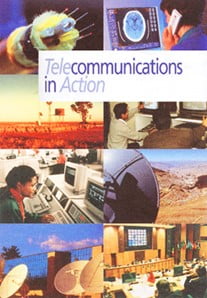
Telecommunications
in Action
Top Recommendations (corporate + development + technology-focused)
1. Connectivity Capital – Captures telecoms, wireless, satcoms, broadcasting, and multimedia as development fuel.
2. Infrastructure Equity – Suggests long-term value from building communication systems across multiple sectors.
3. Digital Leverage – Emphasizes strategic force multiplication through information and communication technologies.
4. Development Bandwidth – Plays on telecom capacity while meaning organizational ability to drive progress.
5. Access Mandate – Highlights reaching non-traditional audiences and encouraging cross-ministry communication.
1. Connectivity Capital – Captures telecoms, wireless, satcoms, broadcasting, and multimedia as development fuel.
2. Infrastructure Equity – Suggests long-term value from building communication systems across multiple sectors.
3. Digital Leverage – Emphasizes strategic force multiplication through information and communication technologies.
4. Development Bandwidth – Plays on telecom capacity while meaning organizational ability to drive progress.
5. Access Mandate – Highlights reaching non-traditional audiences and encouraging cross-ministry communication.
In partnership with:
International Telecommunication Union